
This series is designed to help people better understand the Bible and how it speaks to us. Read the series Introduction post to learn how this series is designed to help you.
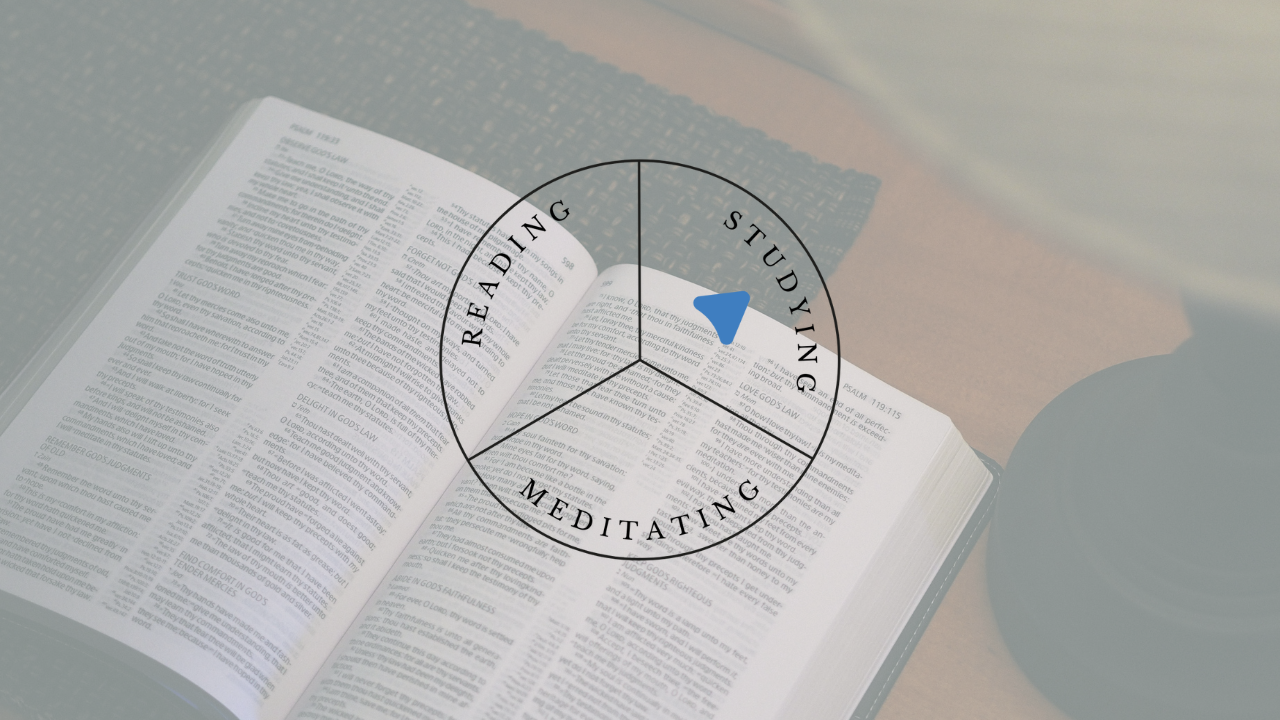
At this point in the series we are learning about the three methods of Biblical Engagement. We introduced these three methods in Part 15, and we covered the first of the three methods in Part 16: Reading. Now we turn our attention to Studying.
Definition, Purpose, & Process
I define studying as the careful investigation of the text.
The purpose of studying is to increase our understanding of God and His Word.
The process of studying is as follows:
- Making Observations in the text.
- Asking Questions about these Observations.
- Pursuing Answers to these questions.
- Wrestling with the text.
- Arriving at faithful conclusions.
Studying begins by making an observation and then going from there. So, grab your list of observations and questions you’ve been documenting while Reading, and start diving deeper into them.
This is when you will use all the outside sources you have available to you, and you can exhaust them to the fullest extent you’re capable of. Utilize your Study Bible notes, Translator Notes, Commentaries, Bible Dictionaries, etc.
The Value of Studying
Studying is valuable for multiple reasons:
Precise and Technical Understanding Studying helps us arrive at the most precise, technical, and nuanced understanding of the Biblical message. Remember, the Bible is God’s Special Revelation. It contains nuanced and complex concepts because God is nuanced and bigger than we can comprehend.
Knowing God: Studying helps us better understand who God is — How has God revealed Himself? What is He like? How does He work? What is important to Him?
Working Towards Interpretation: Studying helps us learn and master the art & science of interpretation.
A Bigger Picture: Studying teaches us that the text is not about us and our immediate context; it is about God and His revelation to the world.
A Basic Picture: Some of the Biblical writers wrote with the assumption that their readers would share a common understanding of the stories being told. The original readers of 1&2 Samuel, 1&2 Chronicles, Ezra, etc. would have been familiar with the content in these books. Modern readers do not share that common cultural understanding; thus, Studying helps us learn that ‘common understanding’ and therefore better understand the basic picture of what is being communicated.
Deeper Impact: The message of Scripture is most poignant when we understand the impact it had on its original audience. Ezekiel prophesied to specific people in specific circumstances. The message of Ezekiel is sharpest when we study those contextual circumstances.
The Practice of Studying
So how do we study effectively? Remember, Studying is the investigation of the text. Studying is when we designate the time and focus to ask any and every question we can think of and then pursue a faithful answer to that question. It’s your designated time to nerd out!
There are many different ways to Study, but let’s look at how to Study a book. We’ll use Matthew as an example. Here is how that process might play out:
- Begin by Reading Matthew (the whole book, at least once) to absorb the flow of the book
- Write down your observations and questions while Reading
- Determine the Study resources you have access to1
- Different Bible Translations
- Study Bible notes
- Commentaries
- Bible Dictionaries
- Maps & Atlas
- Outline of Matthew
- Greek Lexicons
- Investigate your observations and questions by going back and forth between the text and your accessible resources
- You will also accumulate information you weren’t even looking for!
- Wrestle with the information you’re encountering through your investigation
- Does it confirm or confront your Preunderstanding?
- Arrive at faithful conclusions
- You want the conclusions of your Study to align with the Authorial Intent of the passage. For example: what does Matthew intend for his readers to understand when He quotes Jesus as saying “Repent! For the kingdom of heaven is at hand” (Matthew 4:17)?
Side Note: I always see if the text answers my question before consulting an outside source. Sometimes the text does answer it; sometimes it doesn't. Sometimes the answer is in there, but you don't know where to find it. Outside sources will help you navigate this process. The more familiar you are with the Bible (Reading) the easier it will be to find answers within the Biblical text itself.
Suspending Judgement
What happens if you feel like you can’t come to a faithful conclusion? The answer is simple: shelve the topic and revisit it later.
While it might seem like defeat, shelving a topic / question can actually be very profitable. I call this Suspending Judgement. I shelve topics and revisit them all the time. I’ve shelved and re-shelved some topics for 10 years. My goal is to arrive at the intended meaning of the text, and sometimes I can’t achieve that within my desired timeframe. That doesn’t discourage me because there are a number of reasons why the faithful conclusions elude me:
- maybe I’m not familiar enough with the Biblical text
- maybe I don’t have the resources I need
- maybe I’m not mature enough
None of these are fixable right now, so I suspend judgement and trust that one day I’ll be in a better position to complete my investigation. Removing the artificial pressure of needing to know ‘the correct answer’ right now allows me to absolutely love the process of Studying.
How Studying Helps Us Mature
Some people comment that studying only builds up “head knowledge.” That is a possibility, if your goal in studying is simply to build up head knowledge. What I have found over the years is that for the one who studies out of a love for God and a desire to know and be more like Him, God draws that person to Himself and brings that desire to fruition.
Remember, the purpose of Studying is to increase our understanding about God and His Word. God forms our understanding through the studying process.2 Understanding will change our actions and attitudes, and it will develop into wisdom if we continue to seek God and ask Him to refine it. Understanding and wisdom help us mature.
Happy Bibleing!
Footnotes
- I’ve mentioned this before, but I do NOT consider Google to be a useful resource when Studying. It is difficult to vet the sources Google puts in front of you. The best resources come from publishing companies who specialize in Biblical Studies: Zondervan, Baker, Eerdmans, InterVarsity Press, Cambridge, Oxford, Faithlife, Lexham Press, Harvard University Press, Bloomsbury, Thomas Nelson, SPCK, Moody, among others. ↩︎
- One of the best parts about Studying for me is the opportunity to peek into someone else’s mind. Scholars reveal a lot about how they investigate and think through the text through their writing. Keeping an eye out for this can help you become a better investigator of the text! ↩︎
Leave a Reply