
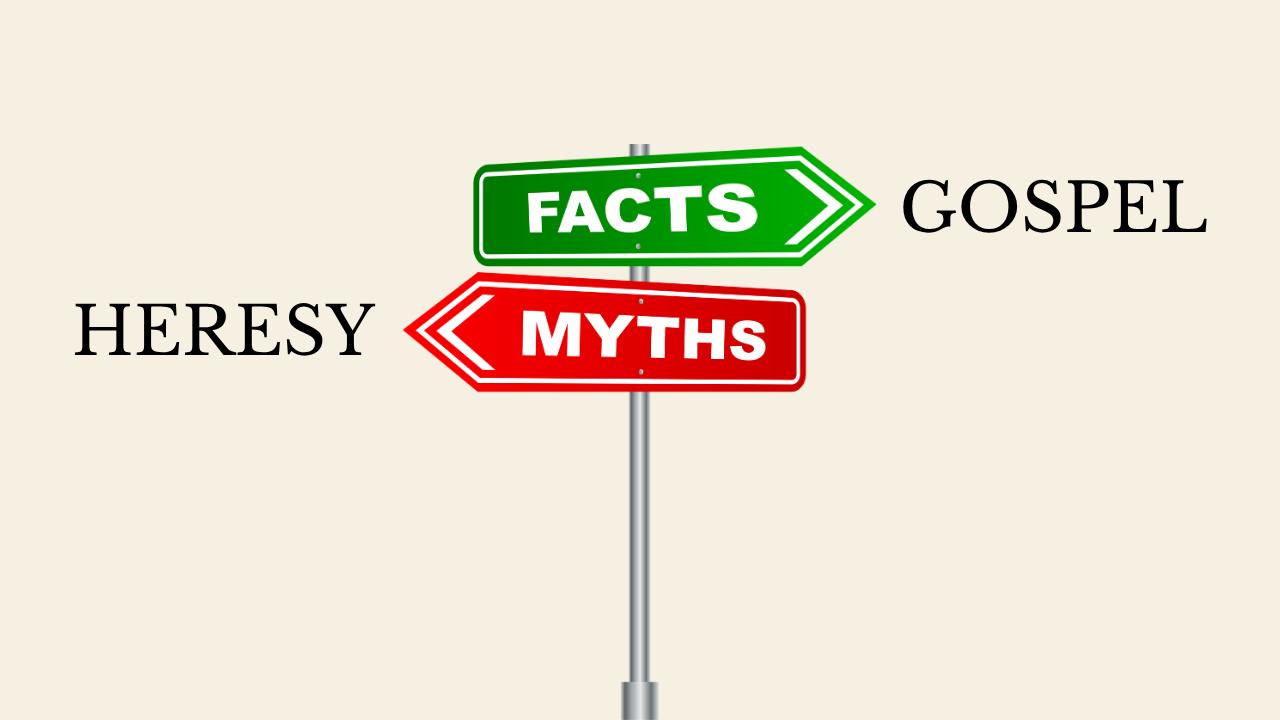
Why Does Doctrinal Error Threaten the Heart of the Gospel?
The early church believed doctrinal error threatened the heart of the gospel because it distorted the Christian faith to something less than what the plenary understanding of the Scriptures foretell and reveal.1 Justo L. González, The Story of Christianity, vol. 1, The Early Church To The Dawn Of The Reformation, rev. ed. (New York: Harper One, 2010), 80–81.
Irenaeus, in his refutation of Valentinus in Against Heresies, outlines the origin myths of Gnostic Christianity. These myths taught that God’s sovereign act of creation was actually distributed among multiple divine entities who are not only distinct from one another but also lack unity of essence because they vary in their degree of authority.2 Against Heresies, 1.1.1–1.2.6
Such teaching cannot be explained as an interpretive nuance of the publicly proclaimed Apostolic gospel. No, it is, as Irenaeus says, a compilation of myths that neither the prophets announced, nor the Lord taught, nor the apostles delivered, but of which they boast that beyond all others they have a perfect knowledge.3 Against Heresies 1.8.1
The gospel was proclaimed by Christ (cf. Matt. 4:17), revealed to the Apostles (cf. Eph. 3:1–6), and delivered/preached to the Church (cf. Acts 2:14–41; Gal. 1:6–10). Thus, the Valentinian heresy contradicted the plenary teaching of Scripture, and its appeal to ‘secret knowledge’ subverted the Apostolic authority. These claims directly threatened the substance of the gospel.
How Did Theological Conflict Strengthen the Church’s Theological convictions and witness?
Theological conflict strengthened the church’s doctrinal witness because it forced them to articulate the catholic Apostolic tradition that was born out of the Scriptures and handed down to the second century church.
Where the Gnostics claimed private and exclusive knowledge, the church reinforced public proclamation. Where the Gnostics taught a divine pantheon, the church began to solidify Christology. Where the Gnostics fractured into a plurality of teaching, the church maintained catholicity through the Rule of Faith.
The church knew they had the deposit of divine truth, and they were emboldened by the Spirit to articulate it.
Works Cited
- González, Justo L. The Story of Christianity. Vol. 1, The Early Church To The Dawn Of The Reformation. Rev. ed. New York: Harper Collins, 2010.
- Roberts, Alexander, James Donaldson, and A. Cleveland Coxe, eds. The Apostolic Fathers with Justin Martyr and Irenaeus. Vol. 1. The Ante-Nicene Fathers. Buffalo, NY: Christian Literature Company, 1885.


Leave a Reply