
This series is designed to help people better understand the Bible and how it speaks to us. Read the series Introduction post to learn how this series is designed to help you.
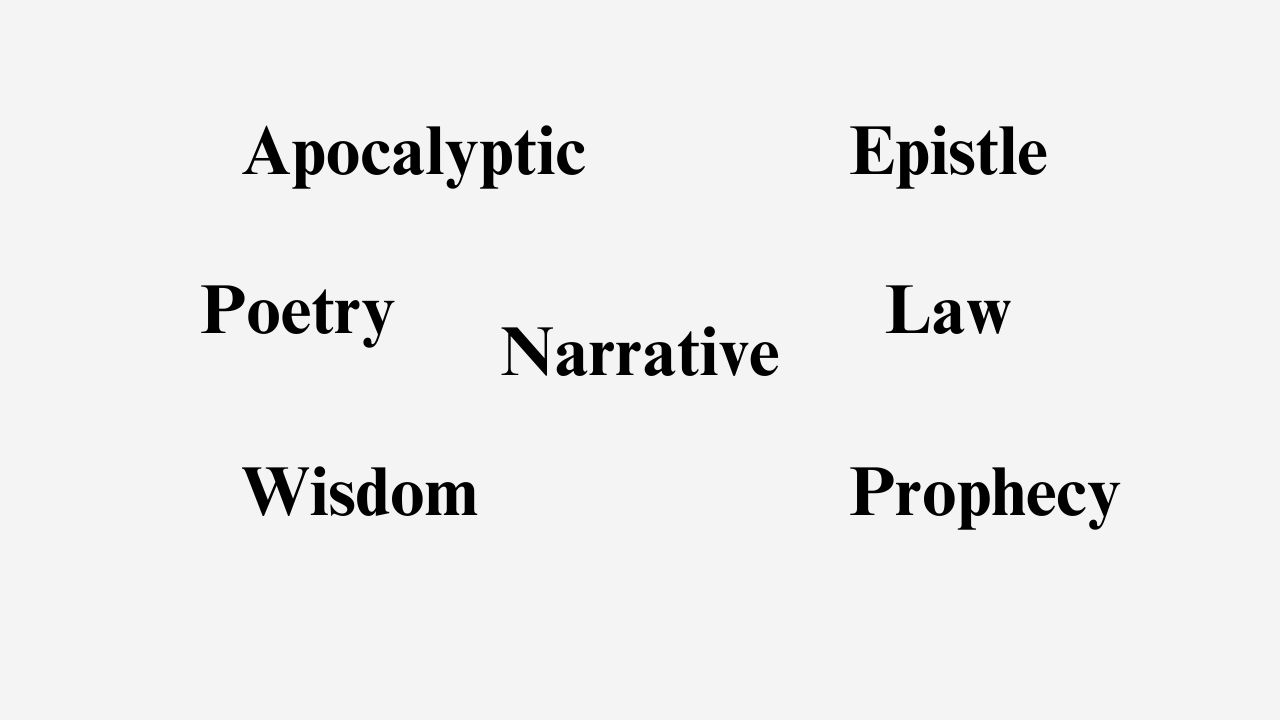
I mentioned genres in our previous post on Literary Context. Now, I wish to give you a bit more insight into how the Biblical genres communicate meaning. I will discuss 6 main literary genres found in the Bible: Narrative, Law, Poetry, Wisdom, Prophecy, Epistle and Apocalyptic. It is helpful to keep in mind that genres are not necessarily specific to particular books. Many books have sections of narrative, poetry, prophecy and even law within them. Confused? Don’t let your heart be troubled. The basic concept with genres is that the Biblical writers communicated in different ways.
How does knowing the different genres help?
Literary genres represent writing styles. Different writers use different genres to communicate meaning in different and specific ways. For example, the information in this blog post could have been written in a straight textbook style (genre). However, I chose to present it in a blog series, to make it a bit more personal, and in doing so, make the information a bit easier to take in.
Genres inform us how to read the writer’s content by the literary rules they used to convey their thoughts.
The Biblical Genres
Narrative
Narrative is very common in the Bible. Old Testament books such as Genesis, Judges, 1 & 2 Samuel as well as the New Testament Gospels and Acts are all narratives. This genre has literary elements like characters, narrator, setting, plot, dialogue, description and action. Keep in mind that God Himself is at times a character, affording us precious insight into His personhood. Narratives tell a series of stories that propel the meta narrative forward. Narratives are descriptive, in that they describe what happened. Additionally, narrative gives us insight into who the Biblical characters were and how they responded to various circumstances.
Law
This genre illustrates the complexity of the Biblical genres; it is the presentation of the Mosaic Law, but it occurs within the narrative of the Pentateuch (Genesis through Deuteronomy). Much of Leviticus, for example, is God speaking to Moses. Thus, God is a character engaging in dialogue. Additionally, the Law stems from God’s character. Through the Law, God calls His people to “be holy, for I, the Lord your God, am holy” (Leviticus 11:44-45). The Law outline the Covenant Obligations the nation of Israel is to uphold because of their covenant relationship with God (Exodus 19:3-8).
Poetry
Poetry is exceedingly common in the Bible. There are entire books of poetry (like Psalms), but many books contain sections of poetry (like Isaiah). It is helpful to keep in mind that Biblical poetry is Ancient Near East poetry, and it doesn’t function like modern poetry—rhyming was not a thing then. But it does use extensive figurative and creative language to convey meaning. The writers of Biblical poetry relied heavily on their cultural references to convey meaning, which is why studying Historical / Cultural Context is so important.
Wisdom
Wisdom literature is challenging at times to identify because it often uses poetic elements. Job, Song of Songs, Ecclesiastes and Proverbs are good examples of the wisdom genre. The focus in wisdom literature is ethical and moral virtue. They present the “ought tos” of life lived in relationship with God in a more personal way than does the Law. Wisdom literature is often wordy—why use 15 words when 87 will do?
Prophecy
I believe this to be the most misunderstood genre among believers today. Prophecy is often reduced to telling the future, which is far too simplistic. The prophetic material is direct messages to an individual or nation through a human prophet. These messages were anchored to the real-life circumstances of the recipients (another reason why historical / cultural context matters!). These messages were often in response to moral or religious failures, and could contain warning of future judgment if they didn’t repent.
Prophetic books are not always one prophetic message from beginning to end, but rather collections of many prophetic messages given to the prophet over time (like in Isaiah, Daniel or Ezekiel). My personal experience has found the prophetic material to be some of the richest, deepest presentations of God’s self-revelation anywhere in Scripture.
Epistles
This genre comprises the letters of the New Testament (Romans – Jude). An “epistle” has some minor differences from a “letter,” but you don’t need to concern yourself with that. Think of them as letters. They were sent from an individual to another individual (Timothy, Philemon, Titus) or to churches (Galatians, 1 Corinthians).
The New Testament epistles share many common structural features (greeting, body, final greeting, etc.). One of the structural components that helps us determine the writer’s meaning is flow of thought.
Epistles were written at a specific point in time, to a specific audience, for a very specific purpose. Therefore, it is very important to consider both Historical/Cultural and Literary Contexts when examining them. The Epistles communicate incredibly complex truths about God that paint a beautiful picture of Who He is.
Apocalyptic
The Apocalyptic genre is a beast (pun intended). This genre is so complex that it is difficult to adequately explain in a few sentences. It only occurs in a handful of books, notably Daniel and Revelation. Similar to the prophetic genre, it communicates through figurative language, imagery, divinely appointed messengers and visions. As such it is a difficult genre for the modern reader. Apocalyptic literature REQUIRES substantial study in literary and historical context to understand. It cannot be interpreted “literally”, and we CANNOT assume that the imagery pertains to current events.
Conclusion
As was stated at the beginning, don’t fret about the different genres. I don’t want you to become so paralyzed by analysis (“What genre is this, what’s the Historical/Cultural Context, I need to know the grammar”, etc) that you miss out on the truly Big Picture–forging relationship with the One True and Living God. Learning about the Biblical genres will help you do that because genres tell us how to ‘read by the rules.’ At the end of the day, we want to get more out of our Biblical engagement experience. Part of how we do that is by understanding how the writer structured his words through a writing style (genre) to convey meaning.
Happy Bibleing!
Leave a Reply to Bible Study Tips: Using Sources to Deepen UnderstandingCancel reply