
This series is designed to help people better understand the Bible and how it speaks to us. Read the series Introduction post to learn how this series is designed to help you.
The Beginning of the end — We’ve finally arrived at the third segment of this series: Biblical Engagement. I’ve used this term throughout the series, and we are now going to learn and understand EXACTLY what I mean by it. Everything thus far in the series has been building to this.
How Do You Read The Bible?
Have you ever started your time of Bible reading, felt that you were initially tracking with what you were reading, and then ended up at the bottom of a rabbit hole? Then, when you returned to the text, you couldn’t remember where you were in the text or what was going on?
Or
Have you ever started reading a book or passage of Scripture, lost your flow of concentration, and then ‘woke up’ only to realize you have no idea what is happening?
Or
Have you ever wanted to make sure “the Bible is reading you” so that your time of Bibleing isn’t ‘wasted’, but you didn’t really know how to make sure you were doing it correctly?
I’ve had many people share these same experiences. Furthermore, many admit one (or all) of these is their regular experience. They believe being in the text has had some effect on them, but they also can’t shake the worry that they’re doing something wrong. They get the sense that there is more, but they aren’t sure what that looks like or how to chase after it, so they learn to carry their Bibleing uncertainty with them. At the end of the day, week, month, or year, they know they’ve spent time in Scripture, but they aren’t sure if their understanding has increased (but they know they’ve highlighted a bunch of verses).
The whole point of Get More Ministries is to help people who feel this way get more through the text. And that is what this part of the series addresses.
So how do we actually sit down and grow from our Biblical engagement? First, we have to understand how we engage with the text.
The Methods of Biblical Engagement
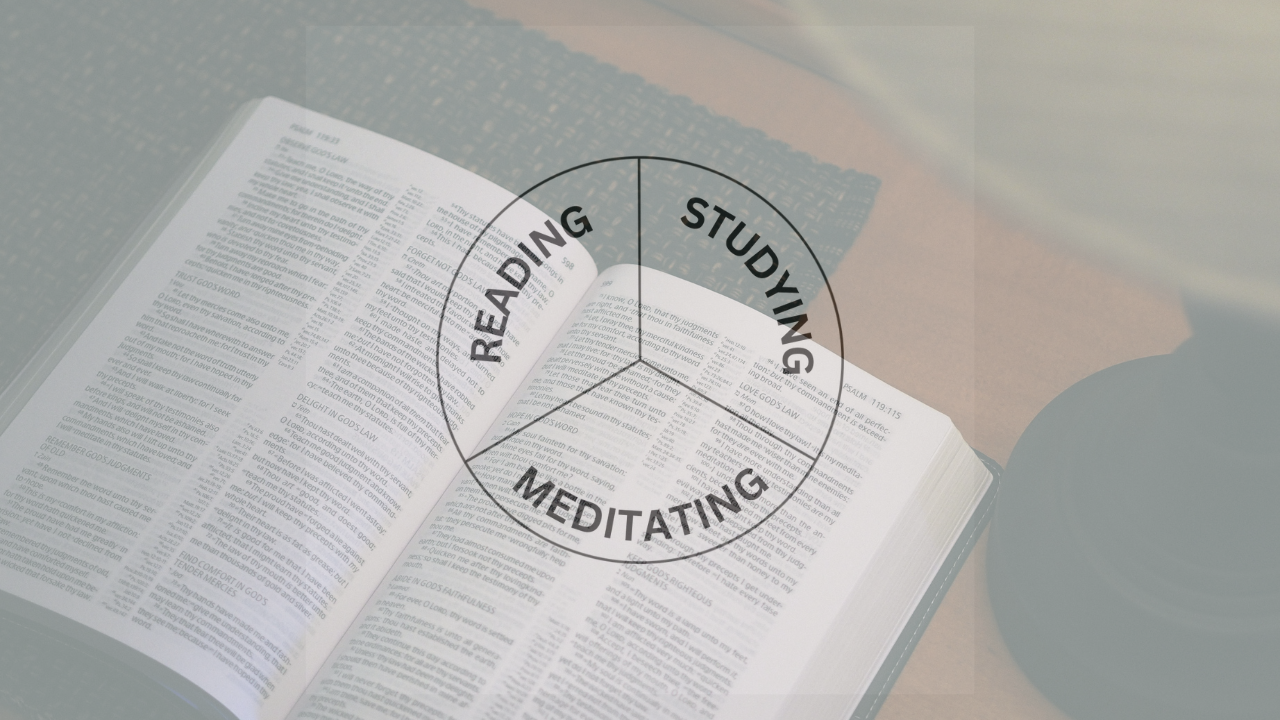
Over the years, I have engaged with the Bible both academically and personally. Academic engagement is slightly different from personal, but the two have overlap; for me, the academic engagement became the foundation of my personal engagement. Through all the hours I have engaged with the Bible, both academically and personally, I have come to realize that we engage with the Bible in three ways:
We Read it.
We Study it.
We Meditate on it.
That’s it. These three methods cover the spectrum of how we engage with and grow from the Bible.
Each one of these methods is different, and that is why I now refrain from using one of them (study) as the catch-all term for opening the Bible.1 They each approach the text differently; they each require their own unique discipline and rhythm; and they each yield different results in our lives. Many times, even if we are not aware of these three approaches, we try to do all three at once. This results in conflicting focus, the gnawing feeling that we are missing something, and a growing desperation to “get it right.”
Maybe hearing that Reading, Studying, and Meditating are all different is helpful in and of itself. You don’t have to do all of them at once. They work in harmony with each other, but I’ve actually found it more helpful to focus on one at a time. This process has increased my understanding, softened my heart, and propelled me towards maturity in Christ.
The next three posts in this series will cover each method in more detail so you can learn how to implement them into your Bibleing routine to grow closer to God.
Happy Bibleing!
Footnotes
- I use “Biblical Engagement as my catch-all term instead of “Bible Study” because Bible study is one of the ways we engage with the Bible. It is a specific method.
I use the term “Bibleing” because it is a little goofy and lighthearted. This alleviates some of the pressure, anxiety, and stress that people feel about not knowing if what they’re doing in their Biblical engagement is correct. “Bibleing” refers to all of it — what they’re currently doing, what they’re worried they should be doing, what they’re trying to accomplish — all of it. ↩︎
Leave a Reply to Understand Your Bible For Deeper Study | Bible Study Tip #2Cancel reply