
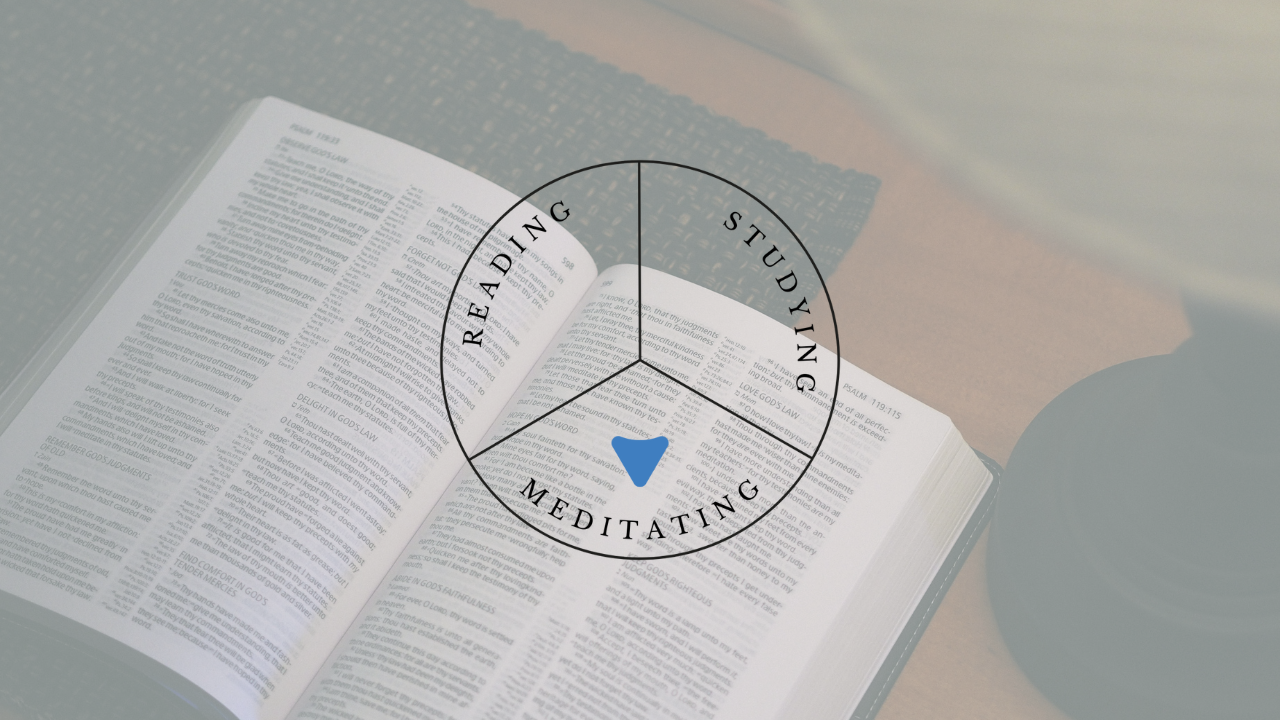
This series is designed to help people better understand the Bible and how it speaks to us. Read the series Introduction post to learn how this series is designed to help you.
At this point in the series we are learning about the three methods of Biblical Engagement. This topic was introduced in Part 15. Reading was covered in Part 16, and Studying was covered in Part 17.
Definition, Purpose, & Process
I define Meditating as intentionally resting in God’s Word.
The purpose of Meditating is to attain spiritual rest, rejuvenation, peace, and appreciation of the beauty and mystery of God.
The process of Meditation is to soak in God’s Word by doing the following:
- Orbit around a single word, verse, or passage
- Ruminate and reflect on what the text says
- Rest in the beauty of being in relationship with God through His Word
- Contemplate the mystery and beauty of who God is
In short, Meditating is when we dedicate time to allow God to minister to our hearts through the Word. The effects of this engagement method are typically what people want / expect from their Bibleing. It is important to remember, however, that the effects of Meditating do not make it the supreme method of Biblical Engagement. All three methods are valuable in their own right, and they all work together to help us get more out of the text.
Meditating may feel like the most intimate of the 3 engagement methods, but it is still a discipline. It is NOT reflecting on “what the text means to me.” It is the practice of allowing God to lead us through an intentional time of deepening our understanding of the reality of His Word. This practice requires intentionality and discipline. The fruit of your Meditation should not contradict the faithful conclusions of your Study.
The Value of Meditating
Meditating in Scripture is incredibly valuable. It brings us to a place of intentional and intimate rest before God. We experience God’s peace in a way we’ve longed for, and it feels fully satisfactory. It is the engagement method where we bring the most of ourselves and ask God to meet us and be with us despite ourselves.
Meditating puts the world around us on pause; it invites us into a space where our only concern gets to be existing in the uninterrupted presence of God. Meditating helps us feel the truths about God. This, in turn, helps us remain anchored to Him throughout the circumstances of our lives, resulting in peace.
The Practice of Meditating
I have employed different approaches to Meditating over the years, and I have noticed some resonate with people more than others. Sometimes it is helpful to begin with a framework for Meditation and then adapt / tweak it from there. Below, I will present the approach called Lectio Divina, which I was first introduced to by a college professor, and I still use it to this day.
Lectio Divina
I was first introduced to Meditating by a college professor through Lectio Divina. There are multiple approaches to Lectio Divina, but here is the way we did it.
Step 1: Reading a passage
Start by choosing a passage to Meditate on. It is best to use smaller sections of Scripture. Read the passage out-loud slowly, allowing your ears to catch and process what they hear. Reading out-loud is valuable because it includes another one of your senses in the engagement process. Meditation is about intentionality, so this may seem silly, but it actually helps. This also allows Lectio Divina to be valuable in a corporate setting as well. You will read the passage a total of 3 times, pausing for a while after each read-through for reflection and contemplation.
Step 2: Reflect on what stands out
Next, identify what stands out and then take time to reflect on it. This can be a word or phrase. For me, it often feels like my attention is being grabbed by this word or phrase. I usually gravitate to words and then think of their definitions, implications, and imagery; some people gravitate more to the imagery. It is also good to reflect on why this word / phrase stood out.
Step 3: Contemplation
Contemplation and Reflection are two sides of the same coin. After reflecting on the definitions, implications, and imagery of a word, I then contemplate on how God leverages those details of the word to convey meaning. For example, I might reflect (Step 2) on the definition, implications, and imagery of “shepherd” in Psalm 23:1, but then I will contemplate on how God reveals & describes Himself as a Shepherd. How does the word “shepherd” and all its details reveal the beauty / mystery of God as a shepherd over creation?
Step 4: Concluding prayer
I incorporate the fruit of my Meditation into my concluding prayer. For example, if Meditating through Psalm 23, I would thank God for being a shepherd, for being the kind of shepherd He is, that I would always recognize Him as my shepherd, and that I would trust Him as my shepherd as sheep trust their shepherd.
Lectio Divina at a glance
- Read Psalm 23 out-loud, slowly
- Reflect & Contemplate for up to 5 minutes
- Read Psalm 23 out-loud, slowly a second time
- Reflect & contemplate on what stood out on this second read-through for up to 5 minutes
- Read Psalm 23 out-loud, slowly a third time
- Reflect & Contemplate on what stood out on this third read-through for up to 5 minutes
- Concluding Prayer
A Testimony On Meditating
My journey with meditating is a late blooming one. My background and first love is an academic study of Scripture. I love the pursuit of understanding; I love increasing my capacity for knowing God. This was my chief pursuit for a long time.
However, I always felt a slight tug towards monastic style prayer and meditation. I decided to meditate more in Scripture and see what happened. The peace and unity with God I experienced was exactly what I wanted and then some.
So, try meditating. Even if it isn’t the first thing you’re drawn to, try it. I think you’ll be surprised at what you find.
Happy Bibleing!
Leave a Reply